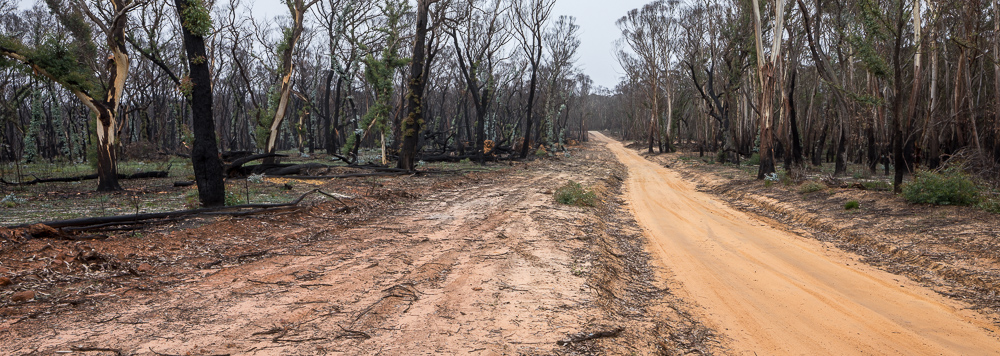
The NSW Government has released the Rural Boundary Clearing Code which allows rural landholders to clear vegetation up to 25 metres inside their property boundaries for the purpose of bushfire protection. The adoption of the Code activates an amendment to the Rural Fires Act 1997 (section 100RA) which was passed as part of the Bushfires Legislation Amendment Bill in November 2020.
The new code only applies to rural areas of NSW that are bush fire prone. Landholders cannot clear neighbouring land. A Rural Boundary Clearing Tool interactive map is available where the status of individual properties under the code can be searched. The Code includes environmental provisions which constrain boundary clearing.
A report in the Sydney Morning Herald points out that this measure was not recommended by the NSW Bushfire Inquiry. What the Inquiry did recommend was that vegetation clearing policies be made “clear and easy to navigate for the community… without undue cost or complexity” (Recommendation 28). The SMH story and a broadcast from the ABC PM program include a range of comments from various sources, many of them critical of the initiative.
IBG comment
- IBG has long argued that asset protection measures need to be focused close to the assets, to maximise benefit while reducing unnecessary impact.
- IBG advocates for evidence-based bushfire management and has therefore previously expressed concerns about the boundary clearing legislation (see Media Release 11 Nov 2020). Any measures need to be part of a coherent and multi-tenure local risk management program.
- No analysis or evidence has been presented to support boundary clearing as an effective bushfire mitigation tool. Fire risk and fire paths do not recognise property boundaries and boundaries are not necessarily close to assets.
- Clearing under the Code poses the risk of significant and widespread ecological impacts through habitat fragmentation while achieving little for fire mitigation.
- Boundary clearing is a simplistic response to a complex issue. Bushfire risk could actually be increased where clearing replaces forest with drier and more fire-prone grassland and shrubland. Fires can easily spot across even wider breaks under severe conditions. Felled trees in windrows can pose a firefighting hazard if not removed or when burnt.
- Poorly-considered bushfire measures distract resources and action away from more effective responses.
- The code places the onus on landholders to comply with the law and relies on self-assessment, with no apparent oversight or monitoring of vegetation cleared, effectiveness or impacts.
Reference links
- Final Report of the NSW Bushfire Inquiry 2020
- Rural Boundary Clearing Code
- Rural Boundary Clearing Tool
- Rural Boundary Clearing Fact Sheet, Rural Fire Service
- “‘Black mark’: Farmers get nod to clear land for bushfire protection”, Sydney Morning Herald, 13 September 2021
- “NSW land clearing code reignites tensions ahead of bushfire season” ABC PM, 14 September 2021
 Independent Bushfire Group