The United Nations has analysed 257 World Heritage forest sites (some in Australasia) and found that overall this forest network has played a vital role in mitigating climate change, by absorbing 190 million tons of CO2 from the atmosphere every year.

The UNESCO report, “World Heritage forests: Carbon sinks under pressure”, covered in The Guardian, found that the 69 million hectares of forest also store substantial amounts of carbon. The carbon sequestration by these forests over long periods has led to total carbon storage of approximately 13 billion tons.
But there is bad news too: 10 of the forests have become net sources of carbon over the past 20 years, due to pressure from human activity and climate change. The million-hectare Greater Blue Mountains World Heritage Area is one of these, as are Yosemite National Park and a rainforest reserve in Sumatra. For the Greater Blue Mountains, the threats/factors cited for this situation are: “Habitat shifting/alteration, droughts, temperature extremes, storms/flooding, fire/fire suppression”.
The report also says: “Since the mid-2010s, intense wildfires associated with extreme temperatures and drought conditions have been a cause of high emissions at some sites. The most prominent examples are wildfires in the Russian Federation’s Lake Baikal in 2016, and in Australia’s Tasmanian Wilderness and Greater Blue Mountains Area in 2019 and 2020.” Some 79% of the Greater Blue Mountains WHA was burnt in the Black Summer fires of 2019-20, to varying severity1.

The UNESCO report is fundamentally an argument for the importance of World Heritage forests and how their role as carbon stores can be retained. These two quotes are notable:
- World Heritage forests provide critical climate benefits only if safeguarded from threats.
- World Heritage forests and their surrounding landscapes require strong and sustained protection to maintain their roles as carbon sinks and stable carbon stores for future generations.
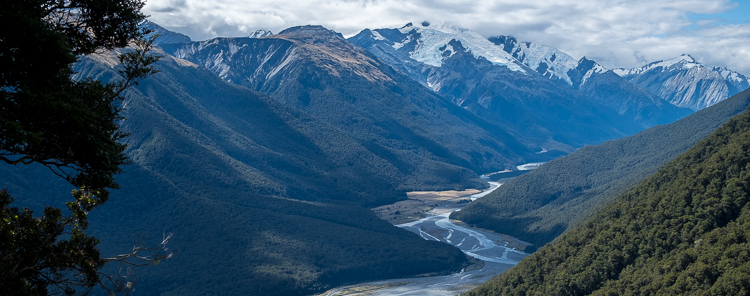
Other world heritage areas in our neighbourhood ranked very highly for carbon storage and as net carbon sinks – Tasmanian Wilderness, Te Wahipounamu South West NZ, Lorentz National Park (West Irian) and Tongariro National Park (NZ). Fire in some of these areas is either unknown or minimal.
IBG Comment
- Large-scale fires, especially if intense, release large volumes of stored carbon. When drought conditions are conducive to large fires its even more important to keep fires small with strong initial attack and the best strategies, as IBG advocates.
- While the Blue Mountains fires of 2019-20 caused a massive release of carbon, the area is now taking up atmospheric carbon with intensive regrowth, supported by good rains after the fires.
- IBG sees it as critical that future fire planning and management for the Blue Mountains and other large forest areas (eg. Gondwanan Rainforests WHA, Australian Alps, Tasmania) put a high priority on carbon budgets.
- This needs to include protection of moist forest types that store the greatest carbon (rainforest and tall open eucalypt forest), and which also act to inhibit wildfire in the landscape under most conditions.
- Better wildfire suppression and careful use of planned fire are other key planks to managing fire for carbon, biodiversity and community protection.
- The alternative is that climate change driven fires could push ecological change and reduce the capacity of our forests to store carbon.

 Independent Bushfire Group