Early in 2023 the CSIRO published an important new book: Australia’s Megafires – Biodiversity Impacts and Lessons from 2019-2020. With five author-editors and 190 scientific, management and expert contributors, this encyclopaedic work focuses on the impacts of the fires in south-east Australia.
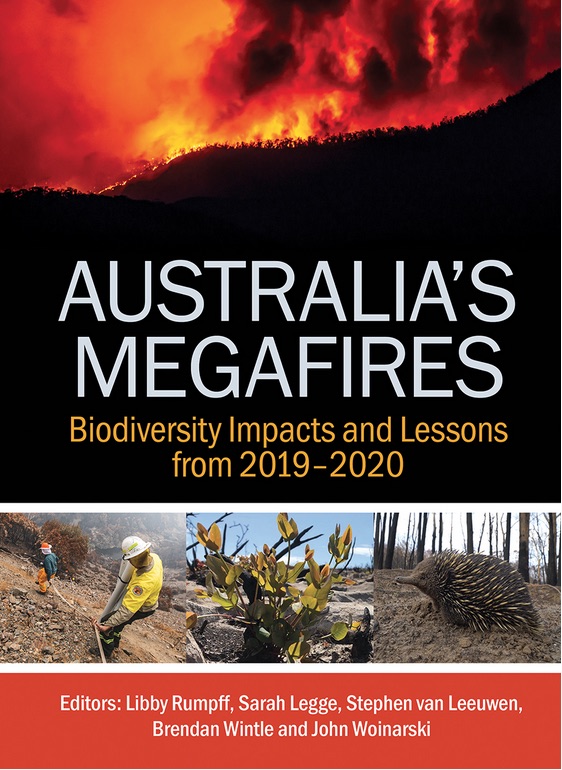
Across 512 pages and 36 chapters, its a compendium that “provides a comprehensive review of the impacts of these fires on all components of biodiversity, and on Indigenous cultural values“. It also documents the huge collaborative response to recover fire-affected species and environments. It then “draws lessons that should be heeded to sustain that recovery and to be better prepared for the inevitable future comparable catastrophes. Such lessons are of global relevance, for wildfires increasingly threaten biodiversity and livelihoods across the globe“.
The scope is vast, taking in everything from Amphibians to World heritage. Examined inbetween are forests, plants, ecological communities, soils, weeds, culture, fungi, inquiries, response and recovery, prescribed burning, feral animals and all animal groups. The final chapters pull it all together to consider what has been learnt, with recommendations and prognosis for the future.
As Megafires emphasizes, fires will be more frequent as the world broils and droughts become more severe with climate change. (Harry Recher)

In a review of the book1 to be published in Australian Zoologist, eminent Australian ecologist Harry Recher agrees with the authors that Australia’s terrestrial environments have been shaped by fire, and goes on to say:
“When wildfires occur, such as the mega-fires of 2019-2020, the dominant response is alarm followed by kneejerk actions intended to prevent or limit future fires and their effects on people. Little consideration is given by authorities to the ecological consequences of those actions; hysteria prevails. I have never seen bushfires as anything other than a natural part of the landscape. For me, fires are ‘grand natural experiments’ allowing me to study the effects of fire on wildlife and help uncover the relationships between climate, weather, and the abundances of animals … Fire is a useful management tool with conservation benefits, but only when used for ecological and conservation reasons, not simply to protect lives and property. Both goals can be achieved simultaneously, but both must be equal partners of fire management and conservation planning. This is a theme repeated throughout [Megafires]”.
Also emphasised in Recher’s review and throughout the book is that existing data on Australian species and ecosystems are inadequate, and not good enough to properly evaluate the impacts of the 2019-2020 fires. Post-fire assessments and long-term monitoring are piecemeal and limited.
The lack of data and not being prepared for such extensive fires hampered efforts to protect biodiversity. (Recher)
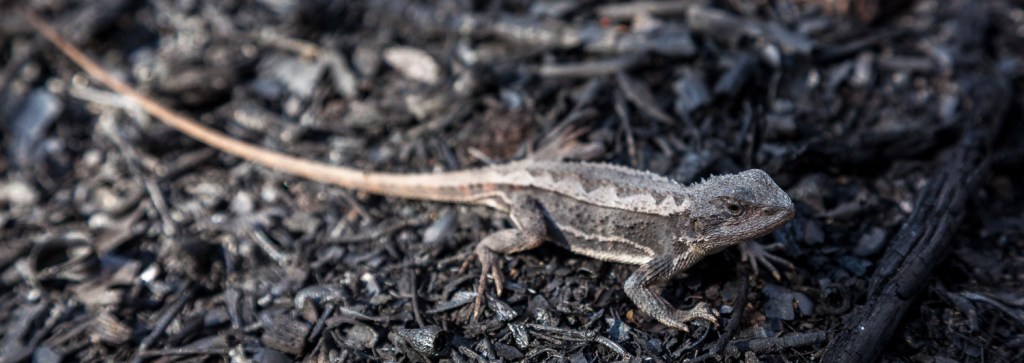
The book considers the extent and impacts of prescribed burning. Reviewing the research, it points out that the main purpose of prescribed burning is the protection of human life and property, but such burning is of limited effectiveness and brief duration in moderating wildfires.
As Megafires explains, fire is a threatening process for the survival of species. However, in my view, the greatest risks of fire to biodiversity are not individual fires, but changes in fire regimes. The season, frequency, and intensity of burns are of greater significance to the long-term survival of species than the extent of individual fires. (Recher)
In his ninth decade Recher is not optimistic about the future of the natural world or humanity, even without more megafires. But he notes the Megafires authors are more hopeful. They say “It doesn’t have to happen like this. We can shape a different future.“
Many of my generation tried to get society to take an ecologically sustainable path to the future. We failed. Now it is time for others to take over. I wish them luck and courage. It will take both. (Recher)
- Harry F. Recher (2023) Tilting at Windmills II: A review of Australia’s Megafires – Biodiversity Impacts and Lessons from 2019-2020, Australian Zoologist, in press ↩︎
IBG comment
- This mega-book is timely and worthwhile, but sadly highlights the parlous state of Australia’s environment and also how we are trying to manage it without enough information or government support. Fire is just part of this larger problem.
- IBG agrees with Recher that protection of life and property from fire can be achieved simultaneously with environmental management, but “both must be equal partners of fire management and conservation planning” (Recher).
- In this context a lot more surveying and monitoring of ecosystems and species between fires is needed, along with more consideration of ecological risks during bushfire operations. This will not detract from a focus on life and property. The NSW Bushfire Inquiry suggested that critical environmental assets should receive protection second only to human life (ie. above property), but did not actually make a recommendation to that effect. The declaration of Assets of Intergenerational Significance, which by law must be considered, is one good step (see IBG Latest News post of 10 September 2021).
- Prescribed burning is one of the tools needed to manage the impact of wildfire on people, property and the environment, and needs to be focused in a way and in places where it will have the most benefit. That’s mostly close to human assets, and in broader bushland areas where it can provide ecological or strategic outcomes. To protect people, more investment and focus is needed to manage risk on private lands and to build the resilience of communities.
 Independent Bushfire Group