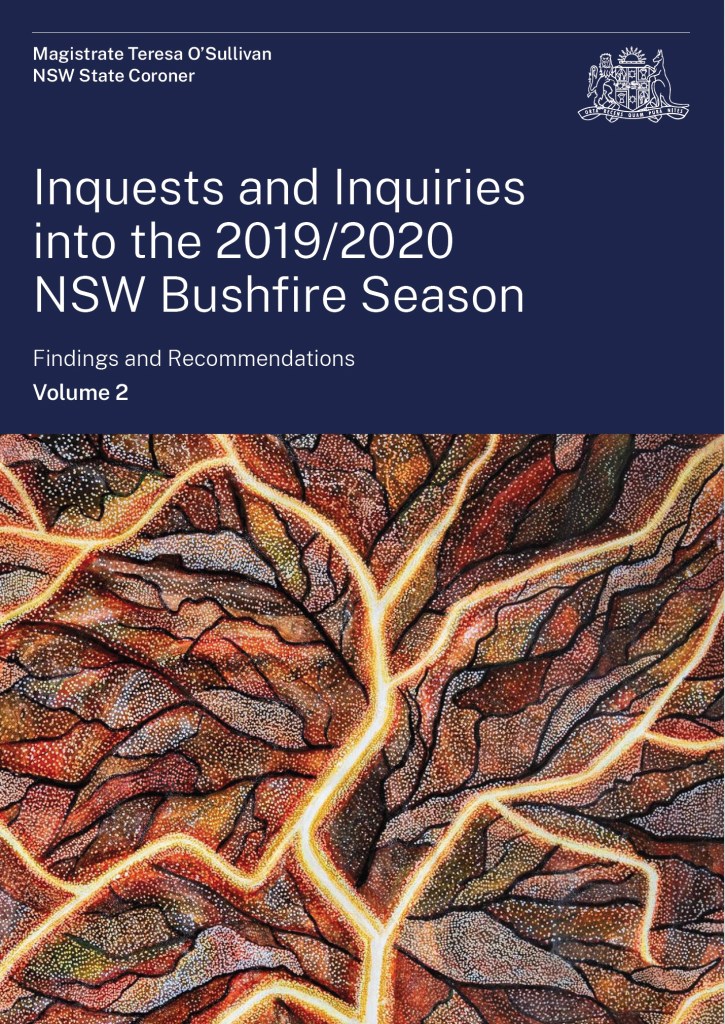
The NSW State Coroner handed down her report from the Inquests and Inquiries into the 2019/2020 NSW Bushfire Season on 27 March 2024. The Coroner made 28 recommendations after more than two years of proceedings. IBG has issued two media releases responding to the outcome of the coronial.
IBG concludes that while the recommendations are welcome, they are very limited in their scope. This and previous inquiries have only been able to scratch the surface of bushfire operations, and coronial inquiries are poorly suited to finding lessons from how fires are managed. The coronial’s main work on examining deaths and the cause and origin of fires is not questioned.
“Coronial inquiries are poorly suited to finding lessons from how fires are managed.”
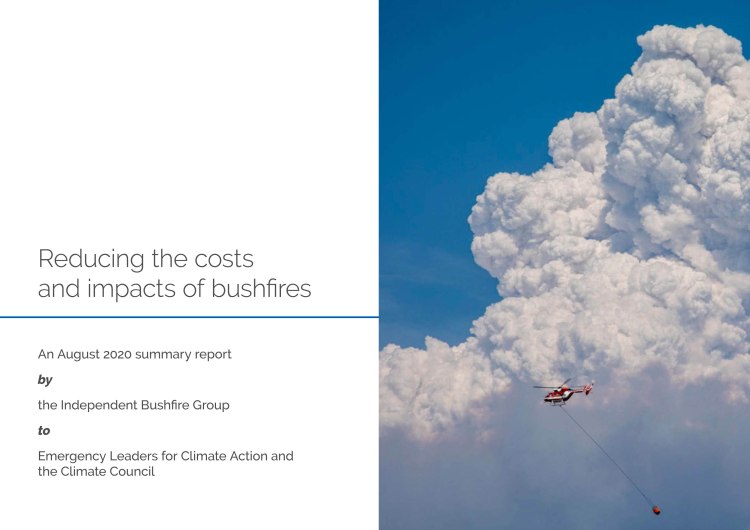
Evidence-based firefighting is critical to building success, but research and analysis is lacking on the best ways to put out big landscape fires, which are likely to happen more often with climate change. It is also significant that no proper review of what happened in combatting the Black Summer fires, or even any specific fire, has yet been produced by government or any inquiry.
Such analyses are critical to understanding what went well and what can be improved, to ensure better outcomes for next time in our worsening bushfire climate. NSW needs independent oversight of disaster learning.
“No proper review of what happened in combatting the Black Summer fires has yet been produced by government or any inquiry.”
Detailed IBG comments
- A number of IBG members have direct experience of previous bushfire coronial inquiries. IBG is on public record since 2021 highlighting that coronial processes are poorly suited to examining bushfire operations. The outcome of this coronial has strengthened those concerns.
- IBG has closely followed the coronial inquiry into the NSW Black Summer fires, and made several submissions. One IBG suggestion was included in Recommendation 11 on bushfire investigations.
- Coronial inquiries and inquests into bushfire ‘cause and origin’ and human deaths are not in question. These were a large part of the workload of the 2019/2020 coronial. However IBG has previously drawn attention to how coronials are not effective in finding operational bushfire lessons in the depth needed (see IBG’s submission to the 2021 Select Committee Inquiry into Coronial Jurisdiction in NSW and 2023 conference paper: Learning from past bushfire operations for future success).
“More than four years is too long to wait”
- Even if coronials were effective for bushfire operations, more than four years is too long to wait. This delay alone proves the need for a better system. Traumatised communities and firefighters deserve no less.
- Bushfire coronials are too slow, too constrained by legal processes, inexpert and too confronting for witnesses. Their focus on negative events and public hearings naturally prompt defensiveness above honest reflection. This coronial report contains factual errors (e.g. the date of a critical event in the Green Wattle Creek fire).
- The perception that everything has been examined is false, because neither the NSW Bushfire Inquiry nor the coronial inquiry focused on actual firefighting, and neither process had the benefit of a detailed analysis of the firefighting operations that happened in Black Summer. Both inquiries recognised their own limitations.
The NSW Bushfire Inquiry (2020) and NSW Bushfires Coronial have both delivered poorly on operational matters
- The NSW Bushfire Inquiry produced 78 recommendations, but only four were about on-ground operations. One of these was on backburning, a complex issue that sits within a much larger context of bushfire strategies and suppression that was not reviewed.
- The coronial that ran for two years only examined one actual firefighting issue which was again backburning, and then only looked at two examples, with limited external expert input. It’s not surprising that the inquiry could not produce any recommendations on the topic.
The coronial recommendations are limited in scope
- The 28 coronial recommendations are mostly about correcting basic procedures, with many oriented towards safety and training. So while these recommendations are valuable and welcome, the scope is very limited. It is disturbing that it was necessary to highlight such basics. Examining these topics used up valuable time at the coronial which could have been used to look at other important issues.
- Many of the recommendations relate to six ‘systemic’ issues that were selected for further examination in stage two of the coronial. How many flawed procedures might continue in areas that still have not been independently looked at?
- The recommendations in total will do little to improve performance on keeping fires small and less damaging in future disasters, e.g. there is nothing on initial attack, suppression strategies or aircraft mix and effectiveness.
- These were the six ‘systemic’ issues examined through selected case studies and the number of recommendations made on each issue:
- Investigation of fires by the NSW Police Force and NSW Rural Fire service (RFS) – 5 recommendations (to Police and RFS)
- Bushfire risk classification – 2 recommendations (to Essential Energy)
- Communications and warnings – 6 recommendations (to RFS)
- Fire prediction modelling – 2 recommendations (to RFS)
- Vehicle design and safety – 3 recommendations (to RFS)
- Backburning operations – planning and execution – nil recommendations
- 10 recommendations to the RFS were also made on aviation safety, which was not one of the selected ‘systemic’ issues.
- These are important topics, but some were not examined deeply and many significant issues that emerged during hearings on these topics were not pursued. Critical issues not examined include how to improve initial attack on remote fires, the prioritisation of resources to fires, especially new fires, and the effectiveness of aerial firefighting.
- The most fundamental question that was not examined was the total firefighting operation’s effectiveness in limiting death and destruction. The conditions of Black Summer and the extent of the fires were often very challenging. This makes it even more important to learn more about how limited firefighting resources can be used most effectively. IBG’s analysis shows that reducing the total extent of the Black Summer fires was possible. This big question has never been looked at by any other body or inquiry.
- As stated above, all recommendations are welcome but many should not have been necessary (e.g. recommendation 6: pilots to be provided with contact details for the fireground and other aircraft on the scene). The recommendations address relatively minor aspects of larger issues and are couched in soft and conciliatory language such as “review”and “consider”.
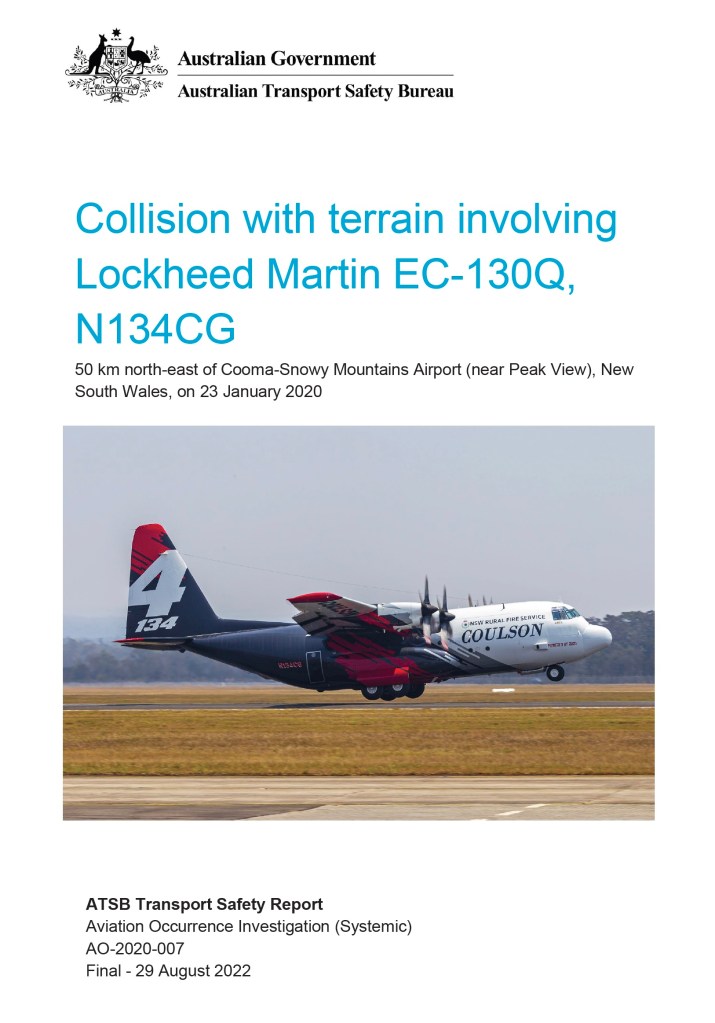
- It is likely that the attention given in the recommendations to aviation safety arose from the large air tanker (LAT) crash at the Good Good fire in early 2020 in which three airmen died, and the comprehensive review of the incident carried out by the Air Transport Safety Bureau (ATSB). The ATSB report exceeds in detail, analysis and independence anything yet done on any other aspect of Black Summer bushfire operations, and provided ample material for the formulation of recommendations by the coronial inquiry.
A better system is needed; disaster review should be overhauled
- The inability of agencies and Black Summer inquiries to come to grips with the full range of important operational issues proves the need for more timely, continuous and expert disaster review.
- Fires and floods are getting worse with climate change. Black Summer revealed inadequate risk assessment and preparation as the drought deepened. NSW needs an ongoing and independent capability for reviewing and improving disaster response. Damaged communities and the whole public need to be confident that vital lessons are being learned and acted upon.
An Inspector General of Emergency Management for NSW
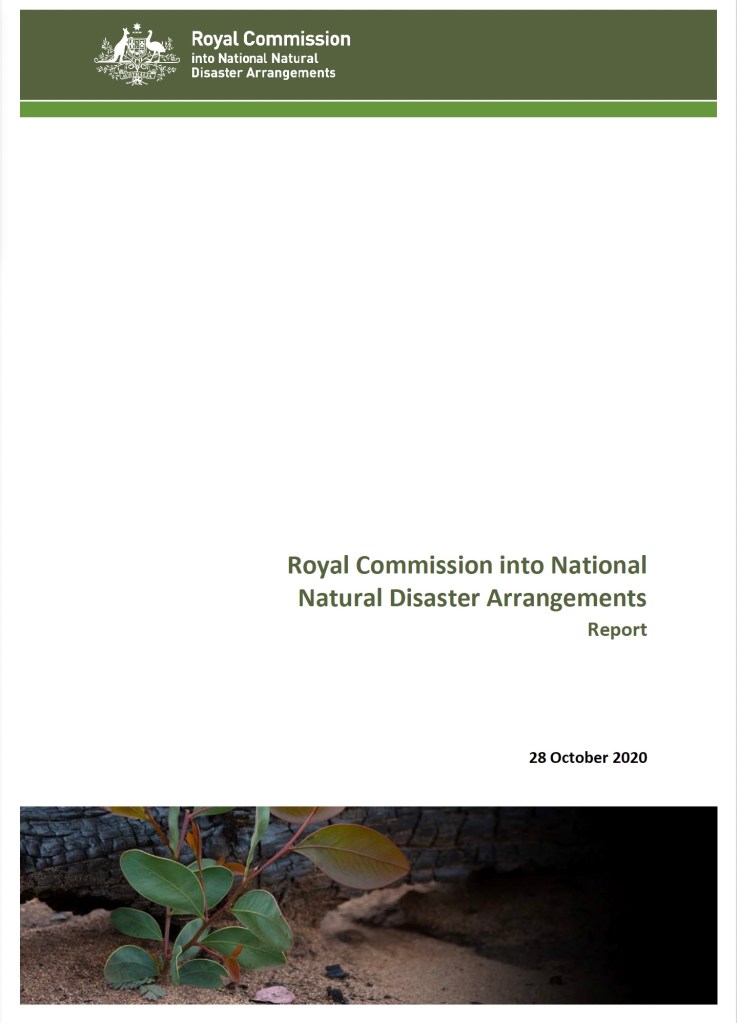
- IBG recommends an Inspector General of Emergency Management (IGEM), as established by Victoria and Queensland a decade ago, and as recommended for other jurisdictions by the Natural Disasters Royal Commission after Black Summer.
- IBG has published a detailed proposal for an IGEM in NSW. The IGEM would be permanent, independent and expert. The IGEM would have NO role in day-to-day operations. The IGEM would oversee lessons management systems and continuous improvement for the emergency sector. It would carry out both routine and critical incident reviews and analysis of emergency operations and issues. It would examine both the good outcomes and where results can be improved.
- Far from being an additional burden, an effective IGEM would streamline the currently ineffective disaster review ‘system’. It would replace the need for ad hoc inquiries after disasters. It would provide expert input to coronial inquiries, just as the ATSB and other bodies do now. Some of this work would be done behind the scenes, in a blame-free way and out of the public glare, thus encouraging open reflection.
- It is important to emphasise that the IGEM role is for all emergency events and operations including floods. In early April NSW has again been lashed with a destructive east coast weather event with loss of life and massive damage. Just as we owe much to fire responders, we also owe much to flood emergency responders and impacted communities. It is vital that an effective lessons learned system can be applied after floods. Without an IGEM it is likely that needed reviews will not happen.
- Other major government functions relating to public safety that already have similar oversight include law enforcement, health, transport, defence and security. Bringing emergency operations into line is long overdue.
- IBG does not expect emergency agencies to welcome such oversight. But they should. IBG does expect the NSW Government to recognise the critical need to make the most of the efforts of thousands of emergency volunteers and paid staff while keeping them safe, to make vast expenditure more effective, and to reduce the death, trauma and destruction NSW communities will suffer in the next disasters. NSW must act, or bear the consequences.
 Independent Bushfire Group
One thought on “IBG responds to NSW Bushfires Coronial”
Comments are closed.