
Why Fly? Assessing the effectiveness of aerial firefighting is a research project of the Australian Government funded body Natural Hazards Research Australia (NHRA), in partnership with the National Aerial Firefighting Centre. The project is bylined: “How do we know that aerial firefighting operations are effective and efficient?” and aims to:
- understand and build the existing use profile of the aerial firefighting (water-bombing) platforms, across different states, territories and landscapes in Australia.
- understand the profile of the purposes for which aerial firefighting platforms are deployed, and how effective that purpose has been.
The Australia-wide project will use more than 10 years of data from the ARENA database as well as case studies of specific aerial fire-fighting operations. The NSW RFS is assisting the research.

IBG comment
- Aerial firefighting is an increasingly important part of bushfire suppression. It is also one of the main costs for large fires, so effectiveness and efficiency are vital issues.
- The questions this research is asking are very good ones, and it is hoped the project will produce better guidance for bushfire operations. Given how difficult it is for independent citizen groups to obtain information about aircraft use, it also hoped that this project will provide some answers.
- It is surprising that these questions are only now being asked, especially the first question about how aircraft are being used. IBG has long questioned whether the makeup of the NSW aerial firefighting fleet is optimal and being used to best effect during fires. Many active firefighters have similar concerns, with a lot of cynicism about how large air tankers (LATs) are deployed.
- Specific issues of concern are the best mix of aircraft, particularly LATs versus smaller fixed-wing bombers, and the best options for initial attack on multiple fires. It seems the firefighting agencies do not have evidence-based answers to these issues, so this overdue research is very welcome.
- Recommendation 50(b) from the 2020 NSW Bushfire Inquiry report called for Government to “work with states and territories through the National Aerial Firefighting Centre to review the current mix of aviation assets and determine whether it is fit-for-purpose, noting the current lack of mid-sized fire fighting aircraft“.
- Recommendation 50(b) has been listed as “Complete” since June 2021, citing the development of the National Aerial Firefighting Strategy 2021-26. But the strategy does not include any ‘review’ of either the NSW fleet or the national fleet. In fact, the strategy repeatedly stresses that each jurisdiction needs to do its own review.
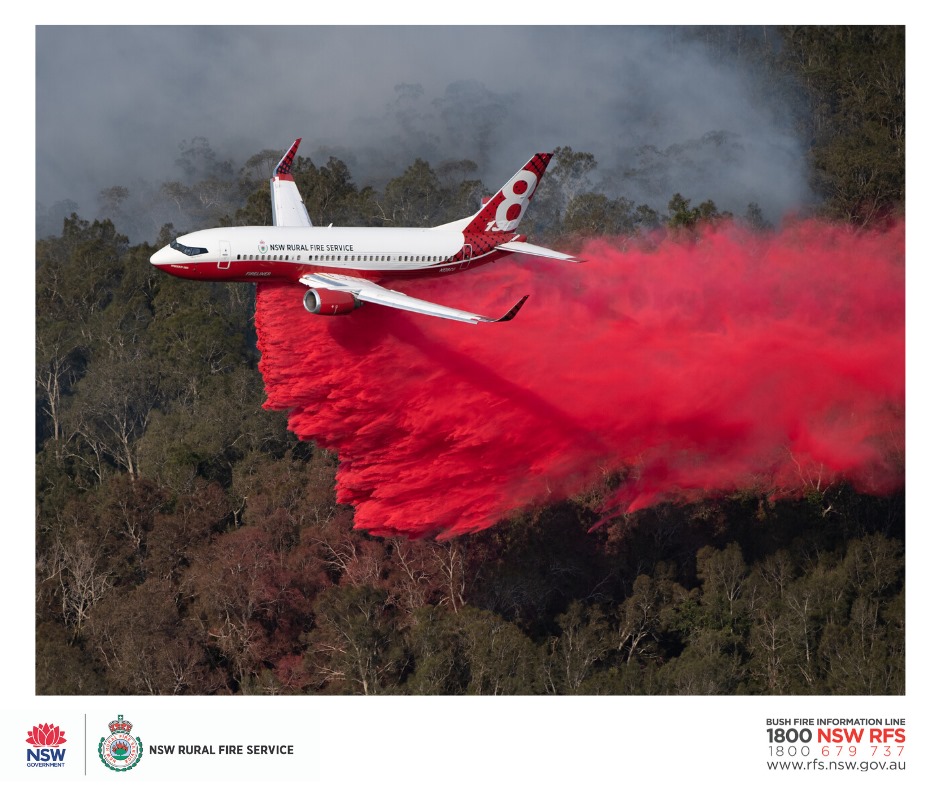
- There has been no published review of the NSW fleet and a strategic approach seems to be absent, and yet acquisitions have continued. (The fleet strategy issue has been analysed in detail in the IBG submission to the NSW Parliamentary Inquiry into the Assets, Premises and Funding of the RFS.)
- The outcomes of Why Fly? will depend on the extent and quality of the available data. Data on aerial missions should include clear and measurable objectives with an assessment of effectiveness and the factors involved. For NSW at least, good aerial data such as this may be lacking.
- As reported in a previous IBG post (April 5, 2023), a NSW pilot study into the Black Summer fires from NHRA (Investigating the suitability of aviation tracking data for use in bushfire suppression effectiveness research, January 2023) found that a lot of basic data was missing which “hamper learning and needs to be improved”. It is unclear whether data collection has improved since 2020, or whether the ‘evaluation database’ recommended by the study has been established.
“Fire management agencies should create an evaluation database that summarises objectives, outcomes, the number and type of aircraft, drops, type and litres, and ancillary observations such as weather, resources available etc.”
Recommendation from “Investigating the suitability of aviation tracking data for use in bushfire suppression effectiveness research” (Bushfire and Natural Hazards Cooperative Research Centre, January 2023)
- If aerial firefighting is to be based on more than past experiences, much more data and analysis are needed.
 Independent Bushfire Group