
Some of the impacts of bushfire come later. The Black Summer fires of 2019-20 in NSW were eventually ended by an intense rainfall event. This caused massive erosion across large parts of eastern NSW where the ground had been denuded only days or weeks before. Slopes suffered extensive sheet erosion, cliffs fell down, gullies were gouged deeper and streams lower down were filled with sediment. Dams too. The total movement of soil was at a phenomenal scale. In the grand sweep of geological time, occasional events such as these do much to shape the landscape. But in this case the impact was caused partly by human changes to the atmosphere. We face the prospect of these powerful events happening more often.
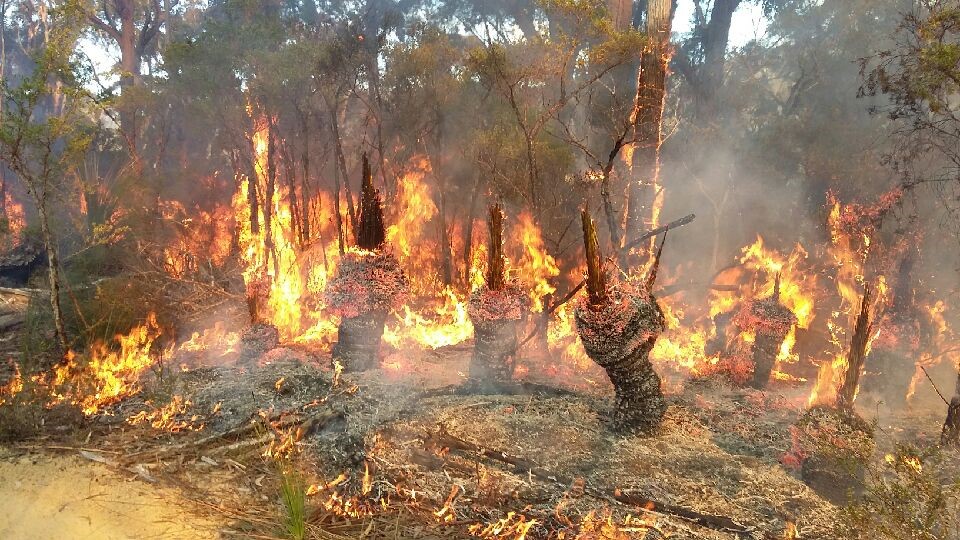
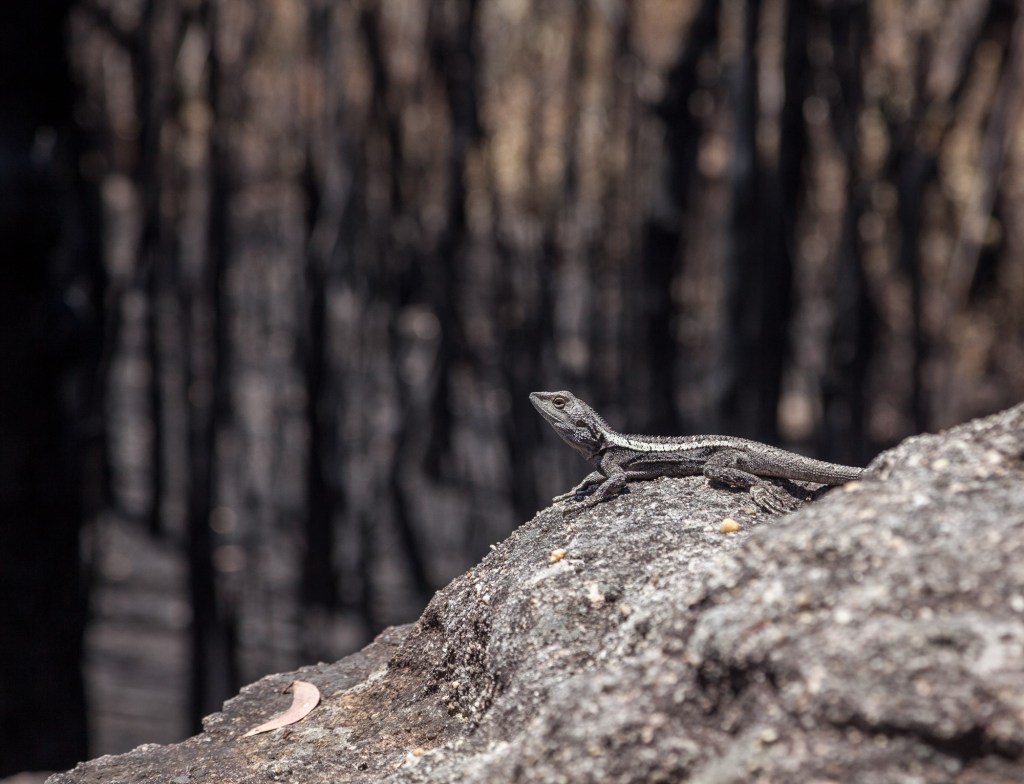
It has been estimated that billions of vertebrate animals perished in the vast fires of 2019-2020. Animals don’t just die by getting burnt or from smoke. Some survive the fire, then succumb later from injuries, or later still from starvation if their food sources have been destroyed. Who knows if this lucky lizard got through the next phase.

A LAT (large air tanker) about to drop fire retardant to protect rail infrastructure near Mt Victoria, Blue Mountains, on 21 December 2019. (Photo: Ian Brown)
It was a bad day in many places. In the background is the boiling mushroom cloud (pyrocumulus) formed by the uplift from the same fire burning across the Grose Valley, Blue Mountains National Park. This fire started 7 days earlier as a backburn, ostensibly to stop the Gospers Mountain fire from crossing into the Grose Valley, but quickly escaped to do just that. It was the best of intentions but the worst of outcomes. The actual wildfire never got close. The backburn went on for 53 days, burning 630 square kilometres, 20 houses, many more outbuildings and large amounts of rail, road, national park and other infrastructure. Its important to analyse and learn from both adverse and successful bushfire suppression to improve the system.

Escaped Mt Wilson backburn fire burning into the Grose Valley, 15 December 2019. (Photo: Ian Brown.)
The escaped fire took off under severe conditions the next day, burnt over Mount Tomah and the Blue Mountains Botanic Garden and into the Grose Valley. For Blue Mountains firefighters and residents, this is a horror scenario because of a history of fires in the valley being very hard to stop and causing severe damage. The upper valley itself, part of the Greater Blue Mountains World Heritage Area, has been burnt by wildfire in 1982, 1994, 2006, 2013 and 2019. The ecology is suffering harm. This fire was eventually stopped in its eastward run with a clever mix of careful backburns, rainforest creeklines, past burnt areas and “remote area” firefighting techniques.

Remote area firefighting techniques in Wollemi National Park, 2013. (Photo: Ian Brown)
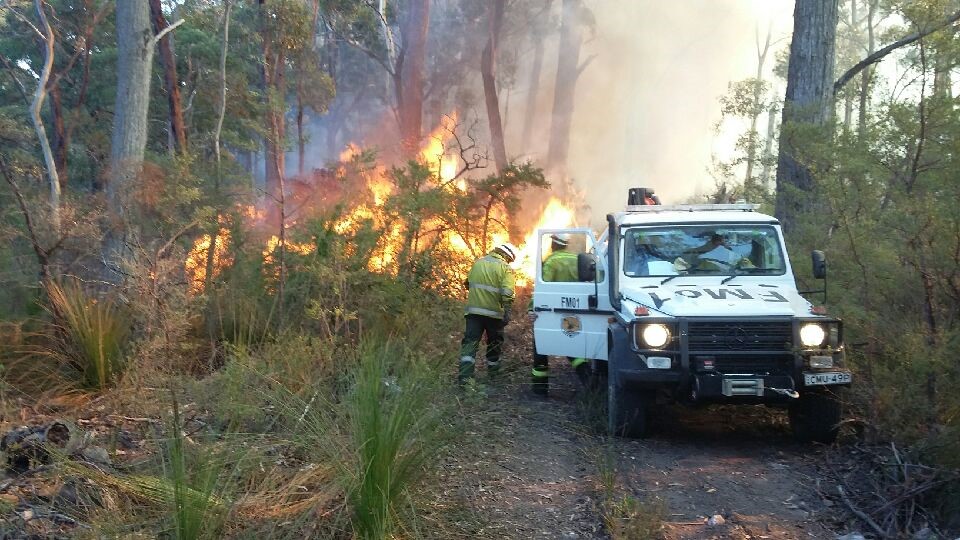
A backburn from a track made with hand-tools is used to contain a fire in the remote Wollemi Wilderness. With firefighters flown in by helicopter and supported with water-bucketing, methods like this can be linked to deep rainforest gorges to make a solid control line. The dissected sandstone terrain of Wollemi is ideal for such techniques but they work in other landscapes too. Often denigrated or dismissed, remote area firefighting techniques like this can be very effectively deployed to limit or stop fires in mild to moderate conditions. But there are sometimes not enough trained and fit firefighters to tackle multiple remote operations at the same time. This was a major limitation during the fires of 2019-2020.


 Independent Bushfire Group