A recent report from the NSW Auditor-General “assessed the effectiveness of the NSW Rural Fire Service (RFS) and local councils in planning and managing equipment for bushfire prevention, mitigation, and suppression.” The report focused mainly on the RFS fire fighting fleet, which comprises land vehicles, marine craft and aircraft, all of which are integral to the agency’s overall bushfire risk management.
Tag Archives: Blog
Problems with Bushfire Recovery grants
The Department of Regional NSW did not effectively administer the Fast-Tracked stream of the BLER.
The administration process lacked integrity, given it did not have sufficiently detailed guidelines and the assessment process for projects lacked transparency and consistency.
Better backburning & fire danger ratings
Early in 2021 the Rural Fire Service (RFS) responded to a recommendation (no. 47) from the NSW Bushfire Inquiry and introduced a new protocol for backburning. In a more recent advance, also related to to a NSW Bushfire Inquiry recommendation, a new Australian Fire Danger Rating System (AFDR) has been developed nationally and will be rolled out in NSW from September 2022.
Bushfire budget announcement
The 2022-23 budget will commit another $315.2 million over the next four years to “complete
the recommendations of the NSW Bushfire Inquiry”.
Coronial Jurisdiction in NSW being reviewed
A Select Committee of the NSW Parliament is carrying out a review of the existing coronial system, which holds inquiries into unexplained deaths, damaging bushfires and some other matters.
Book review: “Currowan”
Sometimes a popular publication might have more impact than formal inquiries. IBG member Lyndsay Holme has reviewed an important book for our blog: Bronwyn Adcock’s “Currowan: The story of a fire and a community during Australia’s worst summer” (Black Inc Books, 2021).
Climate change is causing bigger fires
A major CSIRO study has found that forest fires in Australia have been getting bigger, and the main reason is human-caused climate change.
Forests, fires & carbon
The United Nations has analysed 257 World Heritage forest sites (some in Australasia) and found that overall this forest network has played a vital role in mitigating climate change, by absorbing 190 million tons of CO2 from the atmosphere every year.
Burning books
Two recent books- Currowan and Firestorm – offer important contributions to the bushfire discussion, but by very different authors and from quite different perspectives.
Rural boundary clearing
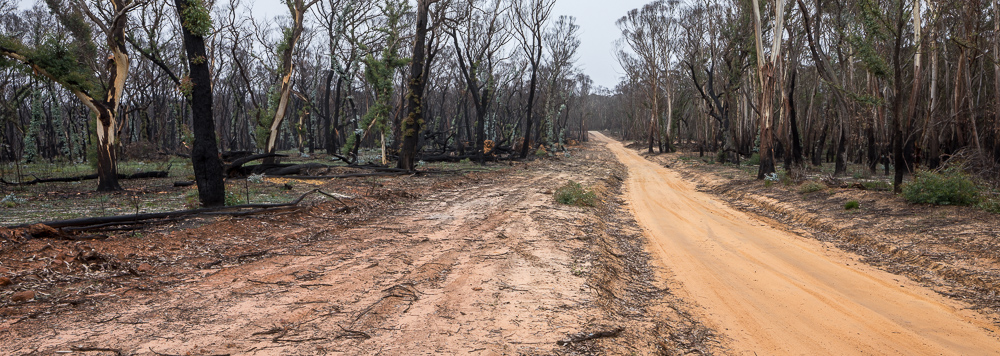
The NSW Government has released the Rural Boundary Clearing Code which allows rural landholders to clear vegetation up to 25 metres inside their property boundaries for the purpose of bushfire protection.
 Independent Bushfire Group