Natural Hazards Research Australia has released the first product of its Why Fly? research project: a review of the literature on aerial suppression effectiveness.
It is now more than two years since Why Fly? took off under the NHRA banner (see IBG post of November 28, 2024 below), and six years since the 2020 Royal Commission into National Natural Disaster Arrangements recommended research and evaluation into aerial firefighting be undertaken to assess the aerial suppression capability needs of states and territories and to explore effective aerial firefighting strategies.
It is more than three years since a Bushfire and Natural Hazards Cooperative Research Centre (forerunner of NHRA) paper on aviation tracking data recommended that “Fire management agencies should create an evaluation database that summarises objectives, outcomes, the number and type of aircraft, drops, type and litres, and ancillary observations such as weather, resources available etc.”
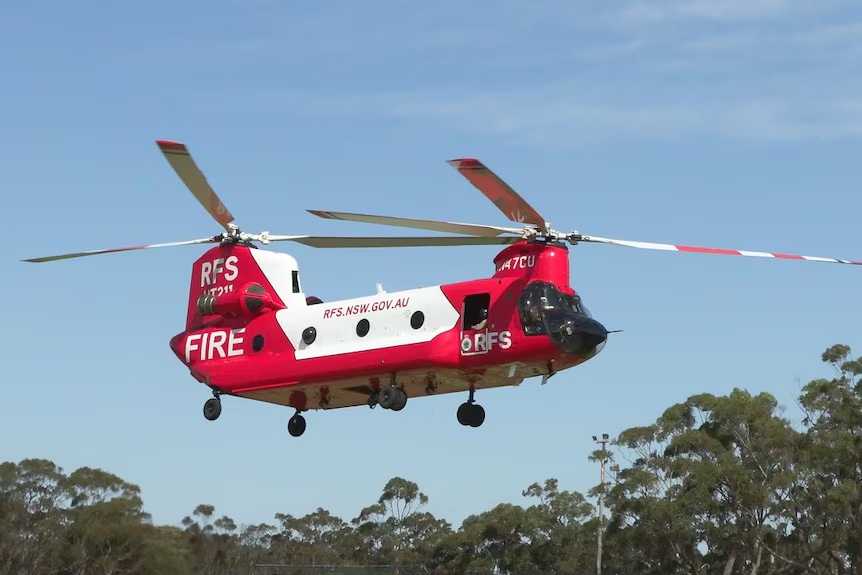
Aviation is an important but increasingly expensive fire fighting tool. IBG expressed concerns in our submissions to the NSW Bush Fire Inquiry and the Royal Commission that aircraft use could be improved.
“The use and effectiveness of firefighting aircraft in Australia is largely unknown, despite the significant amount of public money spent on them.”
(Review of aerial suppression effectiveness research literature, Plucinski, M., NHRA 2025, concluding discussion)
The NHRA literature review noted the paucity of research on the effectiveness of aerial suppression, and the many challenges in producing worthwhile findings. It summarises several broad and detailed studies from the US, but similar research in Australia has been hampered by poor data.
Better data for Australia is starting to be collected and the Why Fly? project is developing its methodology.
IBG comment
- IBG is concerned that six years after the Royal Commission we still don’t have guidelines for effective use of different aircraft types.
- It is also unclear if the comprehensive collection of data as recommended in 2023 is happening yet. This is essential if sound analysis and practical guidelines are to be produced.
- IBG commends NHRA for their work so far and identifying what is needed to get on with data-driven quantitative analysis.
- In the meantime, much can be achieved now with more qualitative research. IBG urges NSW fire agencies to conduct empirical research from fire aviation practitioners to learn from experience and generate use guidelines before the 2026/27 fire season.
“There have been no previous studies of aircraft use on
Australian bushfires, other than a scoping study that presented some isolated examples demonstrating that aircraft tracking and event data are of great benefit for such research.”(Review of aerial suppression effectiveness research literature, Plucinski, M., NHRA, 2025, executive summary)
 Independent Bushfire Group