The Australian Transport Safety Bureau (ATSB) is undertaking investigations into aerial firefighting safety across the country, prompted by the escalating risk environment: aerial firefighting activity has increased, and so has the number of safety occurrences.
The ATSB says aerial firefighting occurs in an inherently hazardous environment, and that since 2016 the ATSB has commenced 17 investigations involving aerial firefighting aircraft.
In this context, the ATSB is conducting an umbrella safety study “to identify any systemic safety issues and other learning opportunities that could enhance the safety of aerial firefighting operations”. The ATSB has previously published a statistical summary A safety analysis of aerial firefighting occurrences in Australia, July 2000 to March 2020 and has now released another subsidiary report: Analysis of Australian aerial firefighting agency and operator interviews regarding aviation safety.
The recent study conducted in-depth interviews with 11 Australian firefighting agencies and 9 aerial firefighting operators. The report does not include findings, but presents the results of those interviews and the key safety themes that emerged. The report will feed into the larger safety study.
“The aim of the interviews was to better understand the aviation hazards interviewees faced, how aviation safety was managed, and the opportunities they could see to improve the safety of aerial firefighting operations.”
– Analysis of Australian aerial firefighting agency and operator interviews regarding aviation safety, ATSB Transport Safety Report, Safety Study – Part A, AS-2021-015a (Final – 13 May 2026)
Key safety issues
18 key safety issues emerged from the interviews:
- Safety culture – overview and leadership
- Learning culture
- Reporting culture
- Informed culture
- Just culture
- Flexible culture
- Standardisation
- Informal risk management
- Pressure to fly
- Transfer of risk responsibility
- Communication over the fireground
- Aircraft coordination
- Training and aviation proficiency of agency personnel
- Pilot performance
- Tasking and risk identification
- Monitoring of changing risk conditions
- High risk tolerance and risk normalisation
- Commercial pressures
Report highlights
Here are a few of the more cogent statements from the report (direct quotes, emphasis added):
- Most agency representatives spoke of a positive fire agency safety culture, while most operators spoke of a negative fire agency safety culture.
- The New South Wales Rural Fire Service (NSW RFS) was identified as having a negative safety culture by 5 operators.
- Interviewees perceived a lack of understanding of aviation safety and risk management among senior fire agency personnel across states and territories.
- Overall, a degree of learning was occurring in some fire agencies, but it was still limited in its scope and application. Some fire agencies did not have a learning culture…
- While fire agencies conducted post-incident reviews, and some reported a degree of trend analysis, these learning actions were limited in scope and had a short-term focus.
- There was a perceived lack of a reporting culture within some fire agencies.
- Some interviewees reported a fear of retribution for reporting incidents or safety concerns and a blame culture.
- Some pilots and operators fear financial repercussions for speaking up.
- There is a perceived lack of formalisation and documentation of risk management practices.
- The biggest perceived sources of pressure [to fly] were from agency to aircrew and public or political pressure.
- Interviewees identified public and political pressure for aircraft to be flown, particularly LATs, even when they were considered to be ineffective.
- Over half of all interviewees expressed concern about the risk of collision.
- Communication issues reportedly led to breakdowns in communication and an associated risk of collision.
- Most interviewees considered some fire agency personnel to be lacking in aviation expertise, and some interviewees were concerned about the use of volunteers for aviation-related roles.
- Interviewees highlighted tasking issues such as a lack of clarity of objectives, a lack of aviation experience of fire agency personnel leading to unrealistic tasking and unsuitable tasking for conditions and aircraft type.
“Agency representatives and operators sometimes had opposing views on the extent to which a safety aspect was being achieved, for example regarding safety culture and a pressure to fly.“
– Analysis of Australian aerial firefighting agency and operator interviews regarding aviation safety, ATSB Transport Safety Report, Safety Study – Part A, AS-2021-015a (Final – 13 May 2026)
IBG comment
- The overall impression from this report is disturbing, but also unsurprising. IBG has previously identified and commented on a number of the same safety and operational concerns. IBG is aware of some incidents, and that NSW operators and agency staff have safety concerns.
- The report highlights the different perceptions of agency and operator interviewees, with agency staff generally reporting a more positive view of safety management compared to operators. This points to aviation safety as a blindspot for agency staff.
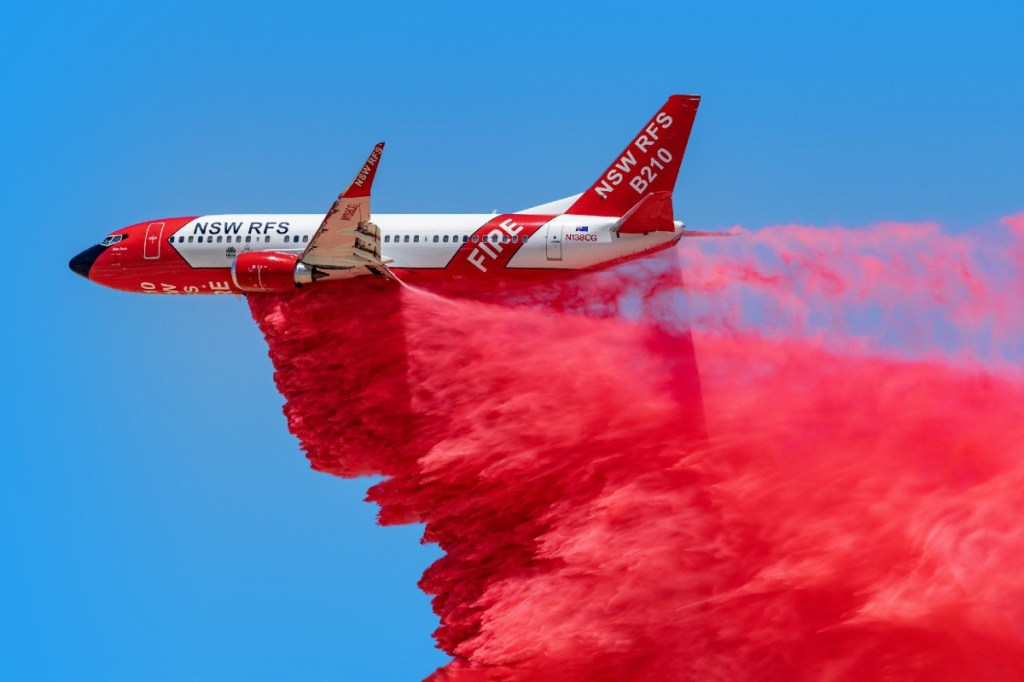
- The report points out that 5 out of 9 operator interviewees identified NSW RFS as having a “negative safety culture”. A number of the other negative views reported might therefore also apply to this agency.
- IBG has been long concerned with optimum use (tasking) of aircraft, especially LATs which can be tasked inappropriately due to unrealistic expectations (agency and public) and over-confidence in their effectiveness. This report confirms that many others in the industry share these concerns.
- IBG’s previous post (below), other posts before it and IBG reports have drawn attention to the poor evidence base for aerial firefighting operations, as well as poor learning cultures. Meanwhile investment in aerial firefighting has continued at pace, informed by little in the public domain.
- Sadly this report adds to a picture of dysfunction within the aerial firefighting industry. It will take a lot of work before this situation can be significantly improved, but this work is essential given the importance of aerial firefighting, the proven safety risks and the high financial costs.
- IBG commends the ATSB for embarking unflinchingly on this safety review, and hopes the final report will identify how the situation can be quickly improved. IBG also notes that it will be great day when all aspects of firefighting receive the same level of rigorous review and analysis.
 Independent Bushfire Group